
Beginner’s Guide to Owning a Pet Rabbit
Rabbits are intelligent, social, and affectionate animals that can make wonderful pets for the right owner. While many people assume a pet rabbit is low-maintenance, they actually require daily care, a suitable living environment, and plenty of attention to stay healthy and happy. If you are considering bringing a rabbit into your home, this beginner’s guide will help you understand the essentials of responsible rabbit ownership.
Why Rabbits Make Great Pets
Pet rabbits can form strong bonds with their owners and often enjoy interacting with people. They are playful, curious, and each rabbit has its own unique personality. Some rabbits are energetic and adventurous, while others are calm and enjoy relaxing in a comfortable spot.
Rabbits are also relatively quiet pets, making them suitable for many households. However, they thrive when given plenty of space, mental stimulation, and companionship.
Choosing the Right Pet Rabbit
Before getting a rabbit, spend time researching different breeds. Smaller breeds such as the Netherland Dwarf can be lively and energetic, while larger breeds such as the Continental Giant tend to be calmer. Regardless of breed, personality is often more important than appearance.
Many animal rescue centres have rabbits looking for loving homes. Adopting a rescue rabbit can be a rewarding choice and often allows you to learn more about the rabbit’s temperament before bringing it home.
Whenever possible, rabbits should be kept in compatible pairs. Rabbits are naturally social animals and often enjoy the company of another rabbit.
Creating the Perfect Home
One of the biggest mistakes new owners make is keeping rabbits in small hutches. Rabbits need enough room to hop, stretch, stand upright, and explore.
Whether housed indoors or outdoors, a rabbit’s living area should include:
- A sheltered sleeping space
- Room for exercise
- Fresh water at all times
- Food bowls and hay racks
- Toys and enrichment activities
- A litter tray for toilet training
Indoor rabbits often enjoy free-roam access to rabbit-proofed areas of the home. Outdoor rabbits need secure housing that protects them from predators, extreme weather, and escape attempts.
Feeding Your Rabbit Correctly
A healthy rabbit diet is essential for preventing many common health problems.
The majority of your rabbit’s diet should consist of high-quality hay. Hay supports healthy digestion and helps wear down continuously growing teeth.
A balanced rabbit diet should include:
- Unlimited fresh hay
- A measured amount of rabbit pellets
- Fresh leafy greens daily
- Clean drinking water
Suitable vegetables include spring greens, kale, cabbage, coriander, and parsley. New foods should be introduced gradually to avoid digestive upset.
Avoid feeding sugary treats too often. While rabbits may enjoy fruits and commercial treats, these should only be given occasionally.
Exercise and Enrichment
Rabbits are active animals that require daily exercise. Without adequate activity, they can become bored, overweight, and prone to behavioural problems.
Provide opportunities for your rabbit to:
- Run and explore
- Dig safely
- Chew appropriate items
- Jump on platforms
- Investigate tunnels and hideaways
Cardboard boxes, untreated wooden toys, tunnels, and forage-based enrichment activities can help keep rabbits mentally stimulated.
Spending time interacting with your rabbit each day helps strengthen your bond and provides valuable social stimulation.
Understanding Rabbit Health
Rabbits are skilled at hiding signs of illness, which makes regular observation important.
Common warning signs include:
- Loss of appetite
- Changes in droppings
- Lethargy
- Breathing difficulties
- Weight loss
- Overgrown teeth
Any sudden change in behaviour should be taken seriously. Rabbits can deteriorate quickly when unwell, so prompt veterinary attention is essential.
Routine health care should include vaccinations where recommended, parasite prevention, and regular veterinary check-ups. Neutering is also often advised as it can help reduce unwanted behaviours and support long-term health.
Building Trust with Your Rabbit
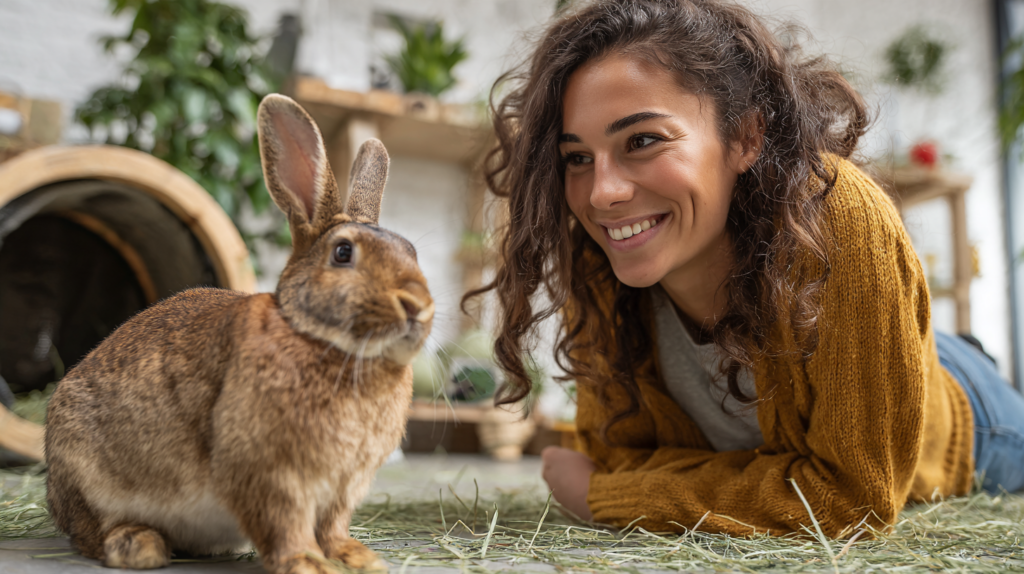
Rabbits are prey animals and may initially be nervous around people. Building trust takes patience and consistency.
Allow your rabbit to approach you on its own terms and avoid forcing interaction. Sitting quietly nearby and offering healthy treats can help your rabbit feel safe and confident.
Many rabbits dislike being picked up, so focus on interacting with them at ground level where they feel more secure.
Conclusion
Owning a pet rabbit can be an incredibly rewarding experience, but it comes with significant responsibilities. Providing a spacious environment, a healthy diet, regular exercise, and proper veterinary care will help your rabbit live a long and happy life. By understanding their unique needs from the beginning, first-time rabbit owners can create a safe and enriching home where their rabbit can truly thrive.