
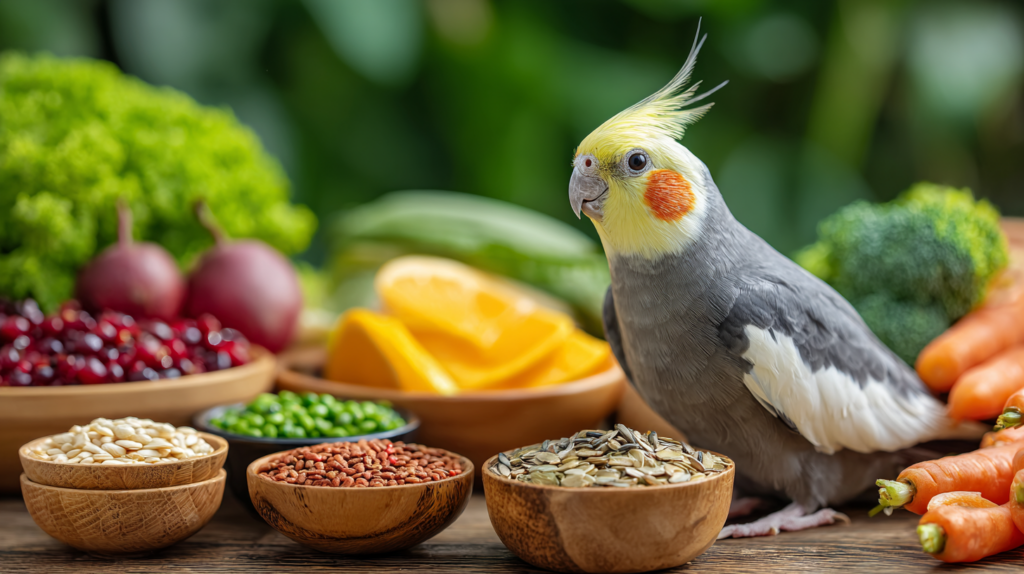
Cockatiel Diet Explained: Seeds, Pellets, and Fresh Foods
Cockatiels are among the most popular pet birds in the world, known for their friendly personalities, intelligence, and charming crests. While providing a comfortable cage and plenty of social interaction is important, one of the most critical aspects of cockatiel care is proper nutrition. Creating the correct cockatiel diet means understanding the balance between seeds, pellets, and fresh foods that can help your cockatiel live a longer, healthier, and happier life.
Why Diet Matters for Cockatiels
A balanced cockatiel diet supports every aspect of a cockatiel’s health, from feather quality and immune function to reproductive health and energy levels. Unfortunately, many cockatiels are fed primarily seed-based diets, which can lead to nutritional deficiencies, obesity, and other health issues over time.
In the wild, cockatiels consume a varied diet that includes seeds, grasses, fruits, vegetation, and other natural food sources. Pet owners should strive to replicate this variety as closely as possible to ensure optimal nutrition.
The Truth About Seeds
Seeds are often a cockatiel’s favorite food, but they should not be the only food offered. While seeds provide fats and energy, they are generally low in essential vitamins, minerals, and amino acids.
Common seed mixes contain ingredients such as:
- Millet
- Canary seed
- Safflower seed
- Sunflower seeds
- Oats
Although seeds can be part of a healthy diet, they should typically make up only a small portion of your cockatiel’s daily food intake. Excessive seed consumption can lead to obesity, fatty liver disease, and vitamin deficiencies.
Seeds are best used as treats, training rewards, or a supplemental part of a balanced feeding plan rather than the foundation of the diet.
Why Pellets Are Important
High-quality pellets are widely recommended by avian veterinarians because they are formulated to provide complete and balanced nutrition. Unlike selective eating from seed mixes, pellets ensure your cockatiel receives essential nutrients in every bite.
Benefits of pellets include:
- Balanced vitamin and mineral content
- Consistent nutrition
- Reduced risk of nutrient deficiencies
- Easier weight management
For most healthy adult cockatiels, pellets should make up approximately 60% to 70% of the overall diet. When choosing pellets, select a reputable brand free from excessive artificial colors and unnecessary additives.
If your bird has been raised on seeds, transitioning to pellets may take time. Introduce pellets gradually while continuing to monitor food intake and body weight to ensure your cockatiel is eating properly.
The Role of Fresh Foods
Fresh vegetables and fruits provide important vitamins, antioxidants, hydration, and enrichment. Offering a variety of fresh foods can help prevent boredom while encouraging natural foraging behaviors.
Excellent vegetable choices include:
- Kale
- Spinach (in moderation)
- Broccoli
- Carrots
- Bell peppers
- Peas
- Sweet potato
- Green beans
Safe fruits include:
- Apples (without seeds)
- Blueberries
- Strawberries
- Mango
- Pears
- Melon
- Grapes
Vegetables should generally be offered more frequently than fruits because fruits contain higher amounts of natural sugar. Fresh foods can make up roughly 20% to 30% of a cockatiel’s daily diet.
Always wash produce thoroughly and remove uneaten fresh food after a few hours to prevent spoilage.
Foods Cockatiels Should Never Eat
Some human foods are toxic or dangerous for birds and should be avoided completely.
Never feed your cockatiel:
- Avocado
- Chocolate
- Caffeine
- Alcohol
- Onion
- Garlic in large quantities
- Fruit pits and apple seeds
- Excessively salty foods
- Sugary snacks and processed foods
When in doubt, research a food item before offering it or consult an avian veterinarian.
A Simple Daily Feeding Plan
A practical feeding routine for most adult cockatiels might include:
- 60% to 70% pellets
- 20% to 30% fresh vegetables and fruits
- 10% or less seeds and treats
Fresh, clean water should always be available and changed daily. Providing food through foraging toys or scattered feeding opportunities can also help keep your bird mentally stimulated.
Final Thoughts
A healthy cockatiel diet is built on balance and variety. While seeds have a place in your bird’s menu, they should not be the primary food source. High-quality pellets should form the nutritional foundation, while fresh vegetables and fruits provide valuable vitamins, enrichment, and variety. By offering the right combination of seeds, pellets, and fresh foods, you can support your cockatiel’s long-term health and enjoy many years with a vibrant, active companion.