
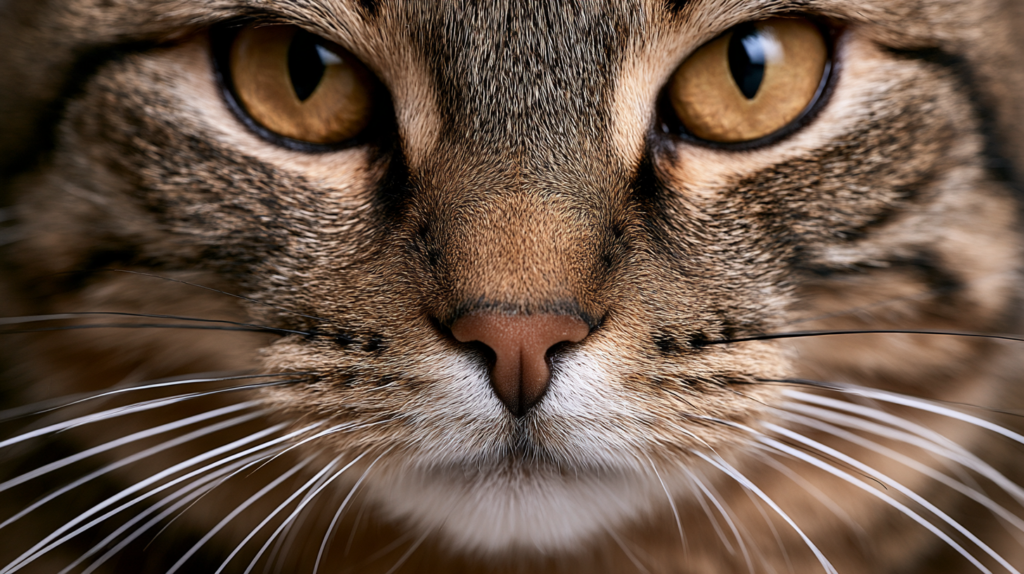
Cat Whiskers: What They Really Do
Cats are fascinating animals, known for their agility, hunting abilities, and mysterious behaviours. Among their most distinctive features are their whiskers, those long, stiff hairs extending from their muzzle, above their eyes, and even on the backs of their front legs. While many cat owners admire whiskers as a charming physical trait, they serve a far more important purpose than most people realise. Understanding what cat whiskers really do can help owners better appreciate their feline companions and provide the care they need.
What Are Cat Whiskers?
Cat whiskers, technically known as vibrissae, are specialised sensory hairs that are much thicker and deeper-rooted than ordinary fur. Unlike regular hairs, whiskers are connected to a dense network of nerves and blood vessels beneath the skin. This makes them highly sensitive to even the slightest changes in the environment.
Each whisker acts like a sophisticated sensory tool, sending information directly to the cat’s brain. In many ways, whiskers function as an extension of a cat’s sense of touch, helping them gather important information about the world around them.
Cat Whiskers Help Them Navigate Their Environment
One of the primary functions of whiskers is navigation. Cats are natural explorers and often move through tight spaces, dark corners, and cluttered environments. Their whiskers help them determine whether they can fit through a gap before attempting to pass through it.
The whiskers on a cat’s muzzle are generally about as wide as its body. When approaching a narrow opening, a cat can use its whiskers to gauge the available space and avoid becoming stuck. This remarkable ability helps cats move confidently and efficiently through their surroundings.
Whiskers are especially useful in low-light conditions. Although cats have excellent night vision, their whiskers provide additional information about nearby objects, allowing them to navigate safely even when visibility is limited.
Detecting Movement and Air Currents
Cat whiskers are incredibly sensitive to changes in airflow. Even subtle air currents created by moving objects can be detected through their whiskers.
This ability is particularly valuable for hunting. In the wild, cats often hunt during dawn and dusk when lighting conditions are poor. Their whiskers help them detect the movement of prey and judge its position, improving hunting accuracy.
Even domestic cats rely on this sensory advantage when chasing toys, insects, or anything that catches their attention. What may appear to be playful behaviour is often supported by the advanced sensory capabilities of their whiskers.
Cat Whiskers Aid in Hunting Success
When a cat captures prey, its whiskers play a crucial role in determining the prey’s position and movement. The whiskers on the face can fan forward, helping the cat assess whether its prey is still alive or attempting to escape.
These forward-facing whiskers provide detailed information at close range, which is especially useful because prey is often too close for the cat’s eyes to focus clearly. This allows the cat to make quick decisions and maintain control during the hunt.
Even well-fed house cats retain these natural instincts, demonstrating just how deeply ingrained whisker functions are in feline behaviour.
Different Whiskers Have Different Jobs
Many owners are surprised to learn that cats have whiskers in several locations, each serving a specific purpose.
Muzzle whiskers are the most noticeable and are used for detecting nearby objects and measuring spaces. Whiskers above the eyes help protect the face by triggering a blinking response when objects approach. Meanwhile, the whiskers on the backs of a cat’s front legs assist with hunting by providing sensory feedback about captured prey.
Together, these whiskers create an advanced sensory system that helps cats interact with their environment in ways humans can barely imagine.
Understanding Whisker Fatigue
A term that has gained attention among cat owners is whisker fatigue. This refers to the discomfort some cats may experience when their whiskers repeatedly brush against the sides of deep food or water bowls.
While not all experts agree on the severity of whisker fatigue, many cats clearly show a preference for shallow, wide dishes that minimise whisker contact during feeding. If your cat appears reluctant to eat from a bowl or frequently paws food onto the floor, switching to a whisker-friendly dish may help.
Should You Ever Trim Cat Whiskers?
The simple answer is no. Cat whiskers should never be trimmed, cut, or removed.
Because whiskers provide essential sensory information, trimming them can leave a cat feeling disoriented and less confident when navigating their environment. Although whiskers will eventually grow back, removing them can temporarily affect a cat’s ability to judge distances and move comfortably.
Final Thoughts
Cat whiskers are far more than decorative facial features. They are highly specialised sensory tools that help cats navigate, hunt, detect movement, and understand the world around them. From measuring narrow spaces to sensing subtle changes in airflow, whiskers play a vital role in everyday feline life.
By understanding the hidden world of cat whiskers, cat owners can better appreciate just how remarkable these animals truly are and ensure they provide an environment that supports their natural behaviours and well-being.